
Contents
Overview
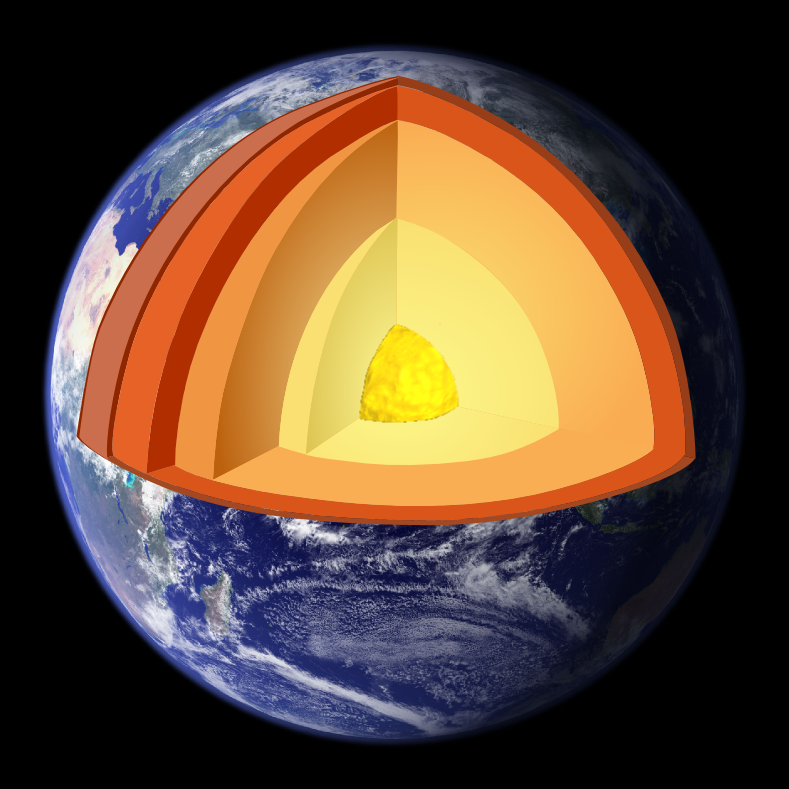
Seismology is the scientific study of earthquakes, the generation and propagation of elastic waves through planetary bodies, and the environmental effects of seismic activity. This field encompasses the study of earthquakes, tsunamis, volcanic eruptions, and other seismic sources, as well as the analysis of seismograms to understand Earth's internal structure and composition. With a rich history, seismology has evolved into a multidisciplinary field, incorporating geology, physics, and mathematics to better comprehend the complex dynamics of our planet. Today, seismologists employ advanced technologies, such as seismic networks and satellite imaging, to monitor and predict seismic activity, ultimately aiming to mitigate the impact of earthquakes on human populations and the environment. The field has also led to significant advancements in earthquake engineering and disaster risk reduction, with the development of early warning systems and evacuation plans.
🌎 Origins & History
The modern field of seismology began to take shape in the late 19th century with the work of John Michell. The development of seismographs in the early 20th century revolutionized the field, enabling scientists to record and analyze seismic waves. Today, seismology is a global endeavor, with organizations like the International Seismological Centre (ISC) and the United States Geological Survey (USGS) playing critical roles in monitoring and understanding seismic activity. The ISC, for example, has developed a comprehensive database of seismic events, which is used by researchers and scientists around the world to study and analyze seismic activity.
🔍 How It Works
Seismology involves the study of seismic waves, which are generated by the movement of tectonic plates, volcanic eruptions, and other seismic sources. These waves can be classified into two main types: body waves, which travel through the Earth's interior, and surface waves, which travel along the surface. By analyzing seismograms, scientists can infer the internal structure and composition of the Earth, as well as the mechanisms driving seismic activity. The field of paleoseismology uses geological evidence to reconstruct the history of past earthquakes, providing valuable insights into the long-term behavior of seismic systems.
📊 Key Facts & Numbers
The Seismological Society of America (SSA) promotes research, education, and outreach in seismology. The International Association of Seismology and Physical of the Earth's Interior (IASPEI) plays an important role in promoting research and education in seismology. The use of seismic tomography has enabled scientists to identify potential geothermal resources and mitigate risks associated with seismic activity.
👥 Key People & Organizations
Seismology has led to significant advancements in earthquake engineering and disaster risk reduction, with the development of early warning systems and evacuation plans. The field has also informed the development of geothermal energy and mining operations, with seismologists using their knowledge of the Earth's internal structure and composition to identify potential resources and mitigate risks.
🌍 Cultural Impact & Influence
Currently, seismology is a rapidly evolving field, with advances in technology and computational power enabling scientists to analyze and model seismic data with unprecedented precision. The development of high-performance computing and machine learning algorithms has enabled seismologists to process and analyze large datasets, leading to new insights into the Earth's internal dynamics. The use of satellite imaging and GPS technology has also improved our ability to monitor and predict seismic activity.
⚡ Current State & Latest Developments
Despite the advances in seismology, there are still controversies and debates surrounding the field. One of the main challenges is the difficulty in predicting earthquakes, with some scientists arguing that it is impossible to predict the timing and location of seismic events. Others argue that advances in technology and modeling will eventually enable accurate predictions. The use of fracking and other human activities has also raised concerns about the potential for induced seismicity, highlighting the need for further research and regulation.
🤔 Controversies & Debates
Looking to the future, seismology is likely to continue playing a critical role in our understanding of the Earth's internal dynamics and the processes driving seismic activity. Advances in technology and computational power will enable scientists to analyze and model seismic data with even greater precision, leading to new insights into the Earth's internal structure and composition. The development of early warning systems and disaster risk reduction strategies will also become increasingly important, as the global population continues to grow and urbanize.
🔮 Future Outlook & Predictions
Seismology has numerous practical applications, including the development of earthquake-resistant construction and disaster risk reduction strategies. The field has also informed the development of geothermal energy and mining operations, with seismologists using their knowledge of the Earth's internal structure and composition to identify potential resources and mitigate risks.
💡 Practical Applications
Related topics in seismology include geology, geophysics, and earthquake engineering. The field of paleoseismology uses geological evidence to reconstruct the history of past earthquakes, providing valuable insights into the long-term behavior of seismic systems.
Key Facts
- Category
- sound-science
- Type
- topic